


NOVA: Decoding the Universe - Quantum
A special episode for NOVA’s 50-year anniversary
When we look at the world at the tiniest scales in the subatomic realm, things get weird – very weird. Welcome to the quantum universe, where particles can spin in two directions at once, observing something changes it, and something on one side of the galaxy can instantly affect something on the other, as if the space between them didn’t exist. Buckle up for a wild ride through the discoveries that proved all of this to be true and paved the way for the digital technologies we enjoy today – and the powerful quantum sensors and computers of tomorrow.
NOVA: Decoding the Universe - Cosmos
A special episode for NOVA’s 50-year anniversary
How big is the universe? If it began with the Big Bang, will it also have an end? Is there life beyond our planet? Questions like these inspired the launch of Voyager I in 1977 and have driven innovative space research and exploration ever since. Trace ground-breaking discoveries that have transformed our picture of the universe, from an age when we knew of no planets beyond our solar system, to today, when we have evidence of thousands and estimate trillions more. And follow the teams trying to solve two of the biggest mysteries in cosmology today: What are dark matter and dark energy?
PBS: The Bigger Picture with Vincent Brown
A series of documentary shorts on PBS
Director: Graham Judd / Supervising Producer: Cara Feinberg
Images can tell powerful stories. One iconic photograph can symbolize an entire era. But if we expand the frame and examine the moment in which it was taken, a very different story can emerge. In this series of documentary shorts, Harvard University historian Dr. Vincent Brown meets with curators, photographers and other experts to challenge common assumptions about iconic American images.
NOVA: Beyond the elements
A three-part miniseries on PBS
Producer: Dan McCabe / Co-Producer: Cara Feinberg
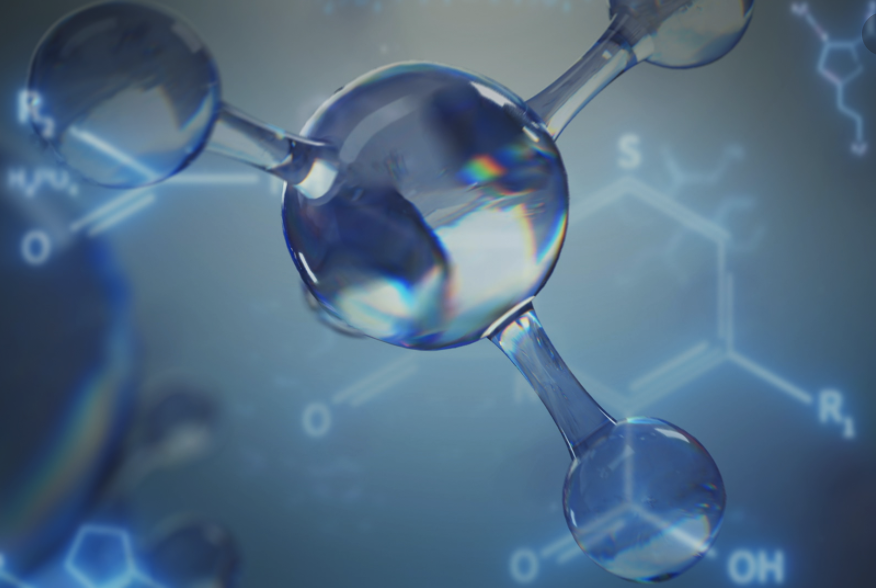
In 2012’s Hunting the Elements, NOVA show-host, David Pogue, introduced us to the basic building blocks of the universe: 118 elements that make up our world. In NOVA’s long-awaited sequel, Beyond the Elements, a three-part limited series, David investigates how that handful of atoms generate the great profusion of substances born from reactions: not thousands, but tens of millions of new molecules and materials, with chemists, biologists and physicists creating or identifying an average of 15,000 new substances each day.
Beyond the Elements
A PBS NOVA three-part series
NOva: PREDICTION BY THE NUMBERS
Producer: Dan McCabe / Co-producer: Cara Feinberg
Predictions underlie nearly every aspect of our lives, from sports, politics, and medical decisions to the morning commute. With the explosion of digital technology, the internet, and “big data,” the science of forecasting is flourishing. But why do some predictions succeed spectacularly while others fail abysmally? And how can we find meaningful patterns amidst chaos and uncertainty? From the glitz of casinos and TV game shows to the life-and-death stakes of storm forecasts and the flaws of opinion polls that can swing an election, “Prediction by the Numbers” explores stories of statistics in action. Yet advances in machine learning and big data models that increasingly rule our lives are also posing big, disturbing questions. How much should we trust predictions made by algorithms when we don’t understand how they arrive at them? And how far ahead can we really forecast?
Nova: search for the superbattery
Producer: Dan McCabe / Co-producer: Cara Feinberg
We live in an age of soaring technological innovation. And yet, as quickly as our gadgets have evolved, many of them share a frustrating weakness: their batteries. Though they've improved in the last century, batteries remain finicky, bulky, expensive, toxic, and maddeningly short-lived. The quest is on for a “super battery,” and the stakes in this hunt are much higher than the phone in your pocket. With climate change looming, electric cars and renewable energy sources like wind and solar power could hold keys to a greener future...if we can engineer the perfect battery. Join host David Pogue as he explores the hidden world of energy storage, from the power—and danger—of the lithium-ion batteries we use today, to the bold innovations that could one day charge our world.
PBS/Tangled Bank Studios: The gene doctors
Producer: Rob Whittlesey / Co-Producer: Cara Feinberg
Every year, over a million babies are born worldwide with a hereditary disease. Many are serious, some fatal. For most of history, doctors could only treat symptoms. Then researchers began to target root causes, but the quest has been long, difficult, and punctuated by tragedy. Now an elite cadre of pioneers—call them gene doctors—is starting to win battles. Through intimate stories of families whose lives are being transformed, The Gene Doctors takes viewers to the front lines of a medical revolution. With early successes and new treatments appearing on the horizon, families battling genetic diseases have never had such good reasons for hope.

NOVA: the great Math Mystery
Producer: Dan McCabe / Associate Producers: Cara Feinberg and Karinna Sjo-Gaber
Where does math come from and why does it work so well to explain our physical world? Is it humankind's clever trick, or the deeply embedded language of the cosmos? In THE GREAT MATH MYSTERY, a one-hour film for NOVA, a cast of the world's top mathematicians, physicists, and engineers embark on a mathematical mystery tour, a provocative exploration of math's astonishing power as it has evolved over the centuries to ponder a profound question: is math an invention or a discovery?
NOVA: Making stuff Wilder
Producer: Dan McCabe / Associate Producer: Cara Feinberg
What happens when scientists open up nature's toolbox? In "Making Stuff Wilder," David Pogue explores bold new innovations inspired by the Earth's greatest inventor, life itself. From robotic "mules" and "cheetahs" for the military, to fabrics born out of fish slime, host David Pogue travels the globe to find the world’s wildest new inventions and technologies.

NOVA: Hunting the elements
Producer: Chris Schmidt / Associate Producers: Cara Feinberg and An-Dinh Nguyen
A two-hour film for NOVA about the hidden building blocks of everything in our world -- the elements. To unlock their secrets, David Pogue, the technology correspondent of The New York Times, spins viewers through the world of weird, extreme chemistry: the strongest acids, the deadliest poisons, the universe’s most abundant elements, and the rarest of the rare that flicker into existence for only fractions of a second.

Hunting the Elements
NOVA
Dreamworks: how to find your dragon
Senior Producer: Gary Glassman / Associate Producers: Cara Feinberg and Corey Crockett
A documentary film for DreamWorks about the perennial fascination with dragons. Aired on PBS stations and as a accompanying special feature film for DreamWorks' "How To Train Your Dragon"

Discovery Science Channel: Build it bigger
Producer: John Gates / Associate Producer: Cara Feinberg
"Turkey's Mammoth Dam" - Season 5 episode 8
Turkey is harnessing one of the world's fastest rivers with one of the tallest hydroelectric dams on earth.